 Welcome to China in Middle East Bridging the Gap Between China and the Middle East

Related Articles
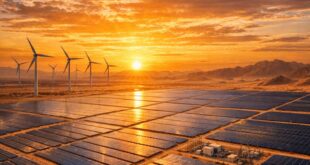
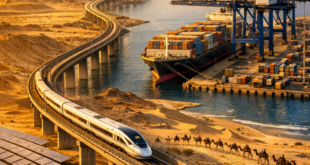
The energy relationship between China and the Middle East is undergoing a dramatic transformation. What was once a simple story of oil flowing eastward is now a complex tapestry of solar panels, hydrogen projects, battery factories, and green technology partnerships that are reshaping the region’s economic future.
From Oil Dependence to Renewable Interdependence
For decades, China’s engagement with Gulf states was defined by hydrocarbons. Beijing bought the oil and gas it needed to fuel its industrial rise, while Riyadh, Abu Dhabi, and Doha built their economies on petrodollars. But 2026 marks a turning point. The China-Gulf energy partnership is shifting from fossil fuel dependence to renewable energy interdependence.
According to the Middle East Council on Global Affairs, this transformation is being driven by four key sectors: solar power, green hydrogen, energy storage, and clean technology manufacturing. Chinese companies are no longer just exporting equipment—they’re building factories, forming joint ventures, and creating localized supply chains across the Gulf.
The Solar Surge
The numbers are staggering. Saudi Arabia’s solar energy market alone is projected to reach 13.47 gigawatts in 2026, surging from 10.25 gigawatts in 2025. The Kingdom is on track to attract over $100 billion annually in strategic energy and renewables investment by 2026.
Chinese solar manufacturers are at the heart of this boom. Companies like LONGi, JinkoSolar, and Trina Solar are establishing manufacturing facilities in the UAE and Saudi Arabia, localizing production to serve both regional and global markets. These investments, announced throughout 2024 and 2025, are now coming online.
Key developments include:
- Manufacturing localization: Chinese firms are building solar PV production lines in Saudi Arabia and the UAE to bypass trade barriers and reduce logistics costs
- Utility-scale projects: Massive solar-plus-storage installations are being developed across the Gulf, with Chinese EPC contractors leading construction
- Technology transfer: Joint ventures are enabling knowledge sharing and local capacity building
The Geopolitical Dimension
The timing of this green rush is no coincidence. The February 2026 conflict with Iran and the temporary blockade of the Strait of Hormuz sent shockwaves through global energy markets. In March, at the height of the crisis, China exported solar panels with a total rated capacity of 68 gigawatts—twice February’s volume and 49% higher than the previous record set in August 2025.
Oil-dependent economies across the Middle East are accelerating their renewable energy programs, both to diversify their economies and to enhance energy security. For Gulf states, partnering with China offers a path to rapid decarbonization without sacrificing economic growth.
Challenges and Opportunities
Despite the momentum, structural obstacles remain. The Carboun Institute’s 2026 status report highlights several challenges:
- Supply chain concentration: Heavy reliance on Chinese components creates vulnerability to geopolitical disruptions
- Grid integration: Rapid renewable deployment strains existing electrical infrastructure
- Financing gaps: While capital is abundant, project bankability remains a concern in some markets
However, the opportunities far outweigh the risks. The Gulf’s abundant sunshine, vast land availability, and sovereign wealth fund capital make it an ideal partner for China’s renewable energy ambitions. Meanwhile, Chinese technology and manufacturing scale provide Gulf states with the tools to achieve their ambitious net-zero targets.
Looking Ahead
The China-Gulf green energy partnership is more than a trade relationship—it’s a strategic realignment that could reshape global energy markets for decades to come. As both regions invest in the technologies of the future, they’re creating a new model of South-South cooperation that prioritizes sustainability and mutual prosperity.
The desert sun that once made the Arabian Peninsula a hub of oil production is now powering a different kind of energy revolution—one built on silicon, not carbon.
Sources:
- Middle East Council on Global Affairs: “The China-Gulf Green Rush: Fueling Renewable Energy Cooperation”
- Carboun Institute: “China-MENA Energy Engagement 2026 Status Report”
- CGTN: “Middle East embraces Chinese solar firms for green energy transition”
- INSS: “Red Sun: Solar Energy as China’s Strategic Tool in the Middle East”
- Princeton JPIA: “From Trade to Supply Chain Investments: China’s Three Roles in the Solar Surge of the Gulf Region”