


 CNINME.COM China-Middle East trade intelligence, sourcing, market entry and business culture.

Related Articles
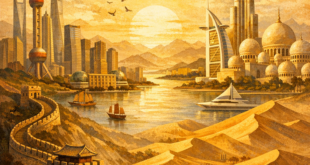
The Silk Road never truly disappeared—it simply waited for its modern renaissance. In 2025 and 2026, that renaissance is in full bloom, with China and Arab nations weaving an increasingly dense tapestry of cultural, artistic, and people-to-people connections that would have made ancient traders proud.
## From Yinchuan to Riyadh: A Year of Cultural Milestones
The momentum is undeniable. The **7th China-Arab States Expo**, scheduled for August 2026 in Yinchuan, promises to place cultural exchange at center stage once again. But the groundwork is being laid right now through a series of landmark initiatives.
In September 2025, the **China-Arab Culture and Tourism Cooperation Conference** in Beijing brought together senior officials from across the Arab world. Saudi Arabia’s Deputy Minister for Research and Cultural Heritage Affairs, Maha Abdullah Alsenan, used the platform to highlight the **Saudi-Chinese Cultural Year 2025**—a sweeping celebration of shared values and sustainable development through culture.
The numbers tell a compelling story:
– **153 research grant applications** received from scholars in Saudi Arabia, China, and beyond
– **20 scholars awarded grants**—10 funded by the Saudi Ministry of Culture, 10 by the China-Arab research center
– **4 joint research projects** with Peking University now underway
## When Cinema Bridges Civilizations
Perhaps no cultural export has captured Middle Eastern imagination quite like **Ne Zha 2**. The Chinese animated blockbuster—already the highest-grossing animated film in history—began screening across Gulf cinemas in mid-2025, becoming the first film ever to cross **$1 billion in a single market**.
The film’s success in the region signals something deeper than box office appeal. It represents a growing appetite for Chinese storytelling in the Arab world, and a willingness to embrace narratives that resonate across cultural boundaries. From Dubai to Doha, audiences have flocked to see a mythological hero whose themes of destiny, rebellion, and redemption feel universally human.
## Training the Next Generation of Cultural Ambassadors
One of the most concrete initiatives is the **2025 Training Program for Arab Officials and Scholars in Culture and Tourism**. More than 20 high-level participants from 11 Arab countries—including Egypt, Algeria, and Morocco—spent weeks immersed in Chinese culture, visiting Shenzhen’s technological marvels and Beijing’s historical treasures.
Omar Dinia, Morocco’s Deputy Director of Strategy and Cooperation at the Ministry of Tourism, captured the spirit perfectly after experiencing drone-delivered coffee in a Shenzhen park: *”I have visited all the continents of the world but have never experienced anything like this in any other country.”*
The program reflects a deliberate strategy: **build understanding through immersion**, then let that understanding seed new partnerships back home.
## The Bigger Picture
These cultural initiatives don’t exist in isolation. They form part of a broader architecture of cooperation that includes:
– **Co-hosted culture and tourism years** between China and multiple Arab states
– **Art festivals and traditional music performances** touring both regions
– **Joint research centers** fostering academic collaboration
– **Tourism operator matchmaking events**, like the August 2025 gathering in Yinchuan that drew 300 guests from 28 countries
The **Shanghai Museum’s Ancient Egypt exhibition**, which concluded in August 2025 after attracting **2.77 million visitors over 13 months**, set a world record for paid special exhibitions—proving that public appetite for cross-cultural engagement is enormous when institutions deliver quality experiences.
## What Lies Ahead
As the 7th China-Arab States Expo approaches and the Saudi-Chinese Cultural Year continues its programming, the trajectory is clear: cultural exchange is no longer a diplomatic afterthought. It is a **strategic pillar** of China-Middle East relations, building the mutual understanding and public support that underpins everything from trade agreements to infrastructure partnerships.
The ancient Silk Road connected merchants. The new one connects minds.
—
**Sources:**
– China Daily, “Handshake across desert and sea” (September 2025)
– Xinhua, “China, Arab states look to boost tourism ties at Yinchuan meeting” (August 2025)
– Khaleej Times, “Cinematic Triumph: Ne Zha 2 Captivates Middle East Audiences” (2025)
– People’s Daily, “China and the Gulf — closer ties, broader prospects” (December 2025)
