 CNINME.COM China-Middle East trade intelligence, sourcing, market entry and business culture.

Related Articles
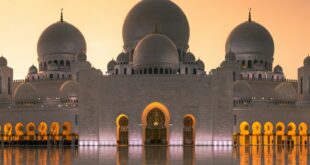
China’s renewable energy partnership with the Gulf states has entered a transformative new phase, evolving from simple equipment exports to deep industrial cooperation. As the region accelerates its energy transition, Chinese companies are emerging as indispensable partners in the Gulf’s ambitious diversification plans.
From Oil Dependency to Green Interdependence
For decades, the China-Gulf energy relationship was straightforward: the Gulf supplied hydrocarbons, China provided manufactured goods. That dynamic is now fundamentally shifting. According to the Carboun Institute’s 2026 status report, renewable energy cooperation has become a cornerstone of China-MENA relations, with Chinese firms establishing joint ventures, manufacturing facilities, and industrial partnerships across the region.
The numbers tell a compelling story:
- Chinese firms participated in approximately $9.5 billion in renewable energy projects across the Middle East between 2018 and 2023
- Saudi Arabia’s solar energy market is projected to reach 13.47 gigawatts in 2026, up from 10.25 GW in 2025
- The Middle East is on track to attract over $100 billion annually in strategic energy and renewables investment by 2026
- China currently accounts for more than 80% of global output across key solar supply chains
Manufacturing Partnerships Take Center Stage
What distinguishes this new phase is the shift from engineering and construction contracts to localized manufacturing. Chinese companies are no longer simply delivering completed projects—they’re building factories, transferring technology, and creating joint ventures that embed them in the Gulf’s industrial fabric.
Saudi Arabia and the UAE have emerged as China’s principal partners for renewable energy manufacturing. Egypt has consolidated its position as a regional manufacturing and export hub centered on the Suez Canal Economic Zone, while Morocco continues to attract investment in renewable generation and green industrial development.
This localization strategy serves multiple purposes:
- Bypasses trade barriers and reduces logistics costs
- Creates local jobs and meets domestic content requirements
- Builds long-term relationships beyond individual project contracts
- Positions Chinese firms for the next wave of regional energy investments
The Storage and Technology Advantage
The Gulf states possess world-class solar and wind resources but lack critical energy storage capabilities. This is where China’s dominance becomes particularly valuable. With six of the top ten global wind turbine manufacturers and over 60% of power battery production, China offers the complete package the Gulf needs.
The complementarity is striking:
- The Gulf boasts solar irradiance levels of up to 6.5 kWh/m² daily, among the world’s highest
- Wind speeds along the Red Sea coast often exceed 6.9 m/s, ideal for large-scale wind farms
- China’s advanced battery storage and smart grid technologies solve the intermittency challenge
Investment Flows Both Ways
The relationship is increasingly reciprocal. Saudi Arabia’s ACWA Power has secured over 1 GW of projects in China, including a 132 MW solar portfolio in Guangdong and a 200 MW wind portfolio with Mingyang Smart Energy. Initial investments total $312 million, with long-term plans reaching up to $50 billion by 2030 for up to 20 GW in clean power assets.
Abu Dhabi’s CYVN Holdings invested $738.5 million in Chinese EV manufacturer NIO in 2023, underscoring the Gulf’s strategic bets on China’s dominance in electric vehicle and battery technologies.
Challenges and Opportunities Ahead
Despite impressive momentum, structural obstacles remain. Many MENA countries face financing constraints, limited domestic industrial capacity, regulatory uncertainty, and insufficient electricity transmission infrastructure. Grid modernization, battery storage, and smarter electricity networks will be essential to support higher renewable penetration.
Geopolitical tensions also pose risks. The Iran war disrupted maritime trade routes in early 2026, limiting Middle East imports of Chinese solar panels despite global demand spikes. This highlights the importance of resilient supply chains and diversified energy systems.
The Road Forward
The trajectory is clear: renewable energy cooperation, green technology manufacturing, electric vehicle trade, and battery construction will increasingly define China-Gulf relations over the coming decade. As both regions navigate the global energy transition, their partnership offers a template for how resource-rich and technology-rich economies can create mutual value beyond traditional commodity trade.
The Gulf states are successfully leveraging Chinese expertise to transform themselves from hydrocarbon exporters into versatile frontrunners in sustainable power generation. For Chinese companies, the region represents not just a market, but a strategic gateway to global green energy markets.
Sources:
- Carboun Institute, “China-MENA Energy Engagement 2026 Status Report”
- Middle East Council on Global Affairs, “The China-Gulf Green Rush: Fueling Renewable Energy Cooperation”
- China Daily Brief, “Chinese Clean Energy Suppliers Win Middle East Grid Deals”
- The Diplomat, “Will Conflict in the Middle East Boost China’s Renewable Energy Sector?”