 CNINME.COM China-Middle East trade intelligence, sourcing, market entry and business culture.


Related Articles
In a landmark moment for Gulf-Asia diplomacy, Oman’s Sultan Haitham bin Tarik concluded his first state visit to Beijing on November 2, 2026, signing 23 bilateral agreements worth several billion dollars with China. The deals span technology, energy, infrastructure, and finance—marking a decisive shift from traditional energy trading toward a comprehensive strategic partnership.
From Oil to AI: A New Era of Cooperation
The visit produced agreements that would have been unimaginable a decade ago. Key highlights include:
- Huawei Ascend AI processors deployed into Oman’s national cloud infrastructure
- A $4.7 billion bilateral currency swap to facilitate trade settlement
- A joint satellite program for space technology cooperation
- Renewable energy projects across solar and wind sectors
- Mining and logistics partnerships leveraging Oman’s strategic position
Beyond Energy: Diversification in Action
For decades, China-Oman relations centered on crude oil exports. The 2026 agreements signal a deliberate pivot. The Oman Investment Authority (OIA) and Chinese partners are now targeting:
- Digital transformation — AI, cloud computing, and smart city initiatives
- Space technology — joint satellite development and launch capabilities
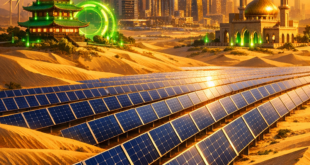
- Green energy — massive solar farms in Oman’s desert regions
- Financial integration — currency swaps and direct banking channels
Strategic Significance
This visit comes at a pivotal moment. With China seeking stable partners in the Gulf and Oman pursuing its Vision 2040 diversification strategy, the alignment is natural. The agreements position Oman as:
- A technology hub for Chinese AI and cloud services in the Middle East
- A logistics gateway connecting Chinese manufacturing to African and European markets
- A renewable energy partner in the global transition from fossil fuels
What This Means for the Region
The China-Oman partnership reflects a broader trend of Gulf states deepening ties with Beijing. Unlike traditional Western partnerships, China offers technology transfer without political conditions—a compelling proposition for nations seeking rapid modernization.
“The 23 agreements signed during Sultan Haitham’s visit represent the most comprehensive expansion of Oman-China relations since diplomatic ties were established in 1978.”
— Oman Observer, November 3, 2026
Looking Ahead
As these agreements move from signing to implementation, the world will watch closely. Can Oman balance its relationships with both China and the West? Will Chinese technology gain a permanent foothold in the Gulf’s digital infrastructure?
What is certain: the Silk Road is being rebuilt—not with camels and caravans, but with AI processors, satellites, and green energy. And Oman intends to be a central stop on that modern route.
Sources: Oman Observer, Muscat Daily, UECN, Gulf News, Al-Monitor