 Welcome to China in Middle East Bridging the Gap Between China and the Middle East

Related Articles


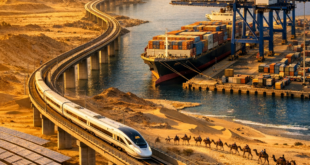
The Middle East has emerged as the undisputed powerhouse of China’s Belt and Road Initiative (BRI), driving record-breaking investment and construction activity that reached an unprecedented $128.4 billion in 2025.
Record-Breaking Year for BRI Engagement
According to the latest China Belt and Road Initiative Investment Report from Griffith University, 2025 marked the highest BRI engagement ever recorded for any single year. Since its launch in 2013, cumulative BRI engagement has reached a staggering $1.308 trillion, comprising approximately:
- $775 billion in construction contracts
- $533 billion in non-financial investments
- Middle East nations accounting for the largest share of new projects
Saudi Arabia alone accounts for nearly half of all BRI projects in the region, cementing its position as China’s most important infrastructure partner in the Arab world.
UAE: A Strategic Hub for Chinese Engineering
At the Abu Dhabi Infrastructure Summit (ADIS) 2026, China Harbour Engineering Company (CHEC) — the international arm of China Communications Construction Company (CCCC) — showcased its deepening footprint across the Gulf. The company confirmed its involvement in several mega projects, including:
- The Dubai–Abu Dhabi high-speed rail line
- Expansion works at Al Maktoum International Airport
- Ongoing projects in the UAE valued at approximately $10 billion
Remarkably, the UAE and broader Gulf markets now account for around 30% of CHEC’s global business, with operations spanning nine Middle Eastern countries and major hubs in both the UAE and Saudi Arabia.
AI Meets Infrastructure: The Next Frontier
Beyond traditional civil engineering, Chinese firms are increasingly integrating artificial intelligence into Middle East infrastructure projects. CHEC announced a new cooperation agreement with UAE entities to advance AI applications in construction and infrastructure — a clear signal that the next phase of China-Gulf cooperation will be as much about smart technology as it is about steel and concrete.
This convergence aligns with the broader trend of Chinese private sector companies — including East Hope Group, Xinfa Group, and Longi Green Energy — driving the majority of new BRI investments, particularly in renewable energy and high-tech manufacturing.
GCC Rail Network: A Game-Changing Corridor
Adding further momentum, Gulf Cooperation Council (GCC) leaders agreed at an emergency summit in Jeddah to fast-track a pan-Gulf railway project connecting Saudi Arabia, the UAE, Qatar, Oman, Kuwait, and Bahrain. This network is expected to become a critical logistics corridor, reducing reliance on maritime routes through the Strait of Hormuz and creating new opportunities for Chinese rail technology and financing.
The project echoes China’s own domestic high-speed rail success and positions Chinese engineering firms as natural partners for design, construction, and rolling stock supply.
Key Takeaways
- BRI investments hit an all-time high of $128.4 billion in 2025
- The Middle East leads all regions in new BRI project volume
- Saudi Arabia accounts for ~50% of regional BRI projects
- CHEC’s UAE projects alone are worth $10 billion
- GCC railway integration opens a new frontier for Chinese infrastructure exports
- AI-powered construction is the emerging pillar of bilateral cooperation
As global economic headwinds persist, the China-Middle East infrastructure partnership is not merely surviving — it is accelerating, diversifying, and setting new benchmarks for South-South cooperation.
Sources:
- Griffith University Asia Insights — China BRI Investment Report 2025
- Sharjah24 — CHEC highlights UAE mega projects at ADIS 2026
- WAM — China Harbour Engineering Company showcases UAE projects
- South China Morning Post — GCC logistics corridor development
- Council on Foreign Relations — China in the Middle East, February 2025
Published on May 14, 2026 | Category: Infrastructure & BRI