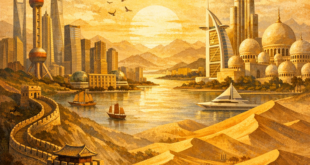
 Welcome to China in Middle East Bridging the Gap Between China and the Middle East


Related Articles

China’s Belt and Road Initiative (BRI) is experiencing a dramatic resurgence across the Middle East, transforming from a long-term infrastructure vision into an urgent engine of post-conflict reconstruction and economic integration. As Gulf nations gather to accelerate cooperative projects, Beijing is positioning itself as the indispensable partner for a region in transition.
The New Silk Road Takes Shape
Unveiled by President Xi Jinping in 2013, the BRI has evolved into what analysts call “the most significant and ambitious strategic initiative of the twenty-first century so far.” The programme spans airports, ports, power plants, bridges, railways, roads, and telecommunications networks across Eurasia, Latin America, and Africa.
In the Middle East specifically, the initiative has taken on renewed urgency. Gulf leaders met in Riyadh in late April 2026 for their first in-person summit since regional hostilities, with infrastructure cooperation high on the agenda.
Key Projects Reshaping Regional Connectivity
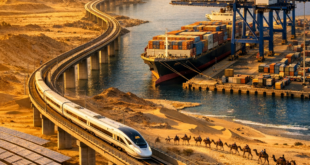
- GCC Railway Network: A 2,117km rail network connecting all six Gulf states from Kuwait City to Muscat, designed for both passenger and freight transport at speeds up to 220km/h
- Iran Post-War Reconstruction: China is leveraging its 25-year strategic cooperation agreement to mobilise massive investments in Iran’s damaged railway, port, and highway infrastructure
- Energy Corridor Protection: Through initiatives like “Dragon Shield,” Beijing aims to insulate energy routes from geopolitical fluctuations
- Port Modernisation: Chinese firms are actively involved in upgrading key ports across the Gulf to handle increased trade volumes
From Economic Vision to Security Necessity
As Gulf studies expert Thomas Bonnie James noted, recent regional conflicts have fundamentally altered the political calculus. Infrastructure projects once considered economic aspirations are now viewed as security necessities, injecting unprecedented urgency into their implementation.
China’s extensive experience working in conflict zones makes it the most likely partner to deliver complex reconstruction projects. The BRI now serves as both an economic framework and a diplomatic tool, helping Tehran break international isolation while securing Beijing’s energy supply lines.
By the Numbers
- 2,117km — Planned GCC railway network spanning six Gulf nations
- $400 billion — Estimated value of China-Iran 25-year cooperation programme
- 13+ years — BRI operational experience across 150+ countries
- 6 — Gulf Cooperation Council member states now prioritising joint infrastructure
Looking Ahead
As the Middle East emerges from a period of intense geopolitical tension, China’s infrastructure diplomacy offers a compelling alternative to Western-led development models. With its combination of financing capacity, technical expertise, and political neutrality, Beijing is cementing its role as the region’s preferred infrastructure partner.
The coming months will reveal whether this resurgent BRI can deliver on its ambitious promises — or whether geopolitical realities will once again derail the dream of a truly connected Eurasia.
Sources: Reuters Breakingviews, Al Jazeera, Modern Diplomacy, Middle East Council