 Welcome to China in Middle East Bridging the Gap Between China and the Middle East

Related Articles

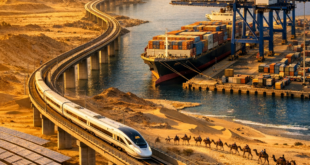
What started as a modest $36 billion trading relationship in 2010 has exploded into a nearly $400 billion economic partnership by 2025. The China-Middle East corridor is no longer just about oil tankers and energy contracts—it is a multi-dimensional alliance reshaping infrastructure, technology, finance, and global supply chains.
The Trade Surge: By the Numbers
China’s engagement with the Middle East has undergone a breathtaking transformation over the past decade and a half. Here are the figures that matter:
- $400 billion — Total China-Arab trade volume in 2025, rebounding strongly after a dip in 2023
- $90.1 billion — UAE’s non-oil trade with China in 2024, making China the Emirates’ largest trading partner
- 3x growth — Renminbi (RMB) settlements between China and GCC countries over the past five years
- $507 billion — Peak China-Arab trade recorded in 2022
- ~60% — Proportion of Middle East population under 30, creating a massive consumer market for Chinese digital platforms and brands
These numbers tell a clear story: the relationship has moved far beyond hydrocarbons into a comprehensive economic interdependence.
Beyond Oil: Infrastructure, Tech & Finance
The Belt and Road Initiative (BRI) has been the primary engine driving China’s Middle East expansion. Chinese firms are now deeply embedded in the region’s most ambitious megaprojects:
- Etihad Rail — A 1,200km high-speed rail network across the UAE, linking Saudi Arabia and Oman, with significant Chinese backing
- NEOM City — Saudi Arabia’s $500 billion futuristic city project features extensive Chinese participation in smart infrastructure and renewable energy
- 5G Networks — Huawei is building digital backbone infrastructure across the UAE and other Gulf states
- LNG Shipbuilding — In 2024, China and QatarEnergy signed the world’s largest LNG carrier order: 18 ultra-large vessels
Meanwhile, Gulf sovereign wealth funds—PIF (Saudi Arabia) and ADQ (Abu Dhabi)—are pouring capital into Chinese technology and green energy companies like JD.com and Geely, signaling a two-way investment street.
The RMB Shift: A Quiet Currency Revolution
Perhaps the most strategically significant development is the accelerating use of the Chinese yuan in bilateral trade. The GCC has signed currency-swap and naming arrangements with Beijing, while the new mBridge platform—developed jointly by Chinese and UAE commercial banks—promises instant, low-cost cross-border transactions focused on the China-UAE corridor.
In June 2025 alone, international RMB settlements for goods trade hit CNY 1.11 trillion (~USD 154.5 billion), compared to just CNY 483.4 billion in early 2015. For Gulf oil producers considering diversification away from dollar dependence, the yuan is becoming an increasingly viable alternative.
What’s Next?
With Saudi Arabia’s Vision 2030, the UAE’s push into AI and smart cities, and China’s 15th Five-Year Plan (2026-2030) emphasizing green transition, the convergence of strategic priorities suggests this partnership will only deepen. Expect:
- Expanded renewable energy cooperation, particularly solar and battery manufacturing
- More joint ventures in petrochemical value chains
- New logistics corridors bypassing the Strait of Hormuz
- Greater RMB-denominated trade settlement across the region
- Deeper integration of Chinese EV and tech brands into Gulf consumer markets
The China-Middle East axis is no longer an emerging story—it is the new normal in global trade architecture. For businesses, policymakers, and investors on both sides, understanding this corridor is no longer optional. It is essential.
Sources:
- CKGSB Knowledge — “Rising China–Middle East Trade and Investment Links” (2025)
- Asia House — “The Middle East Pivot to Asia”
- Forbes — “How Renminbi Internationalization Is Changing” (Feb 2026)
- South China Morning Post — Logistics corridor reports (2025)
- New York Times — China trade and Persian Gulf analysis (Mar 2026)