 Welcome to China in Middle East Bridging the Gap Between China and the Middle East

Related Articles
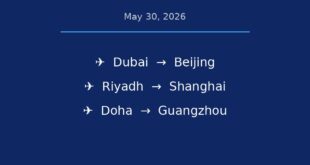
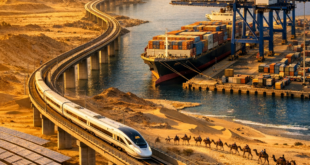
The conflict in the Middle East, which began with the US-Israel war on Iran on February 28, 2026, has triggered what the International Energy Agency (IEA) calls the worst energy crisis in history. As oil and gas supplies through the Strait of Hormuz have been choked, nations worldwide are racing to accelerate their renewable energy transitions — and China is positioned to be the biggest winner.
Record Solar Exports Signal a Paradigm Shift
In March 2026 alone, Chinese solar technology exports surged to a staggering 68 gigawatts — a record high and more than Spain’s entire installed solar capacity. While some of this spike was driven by stockpiling ahead of China discontinuing a tax rebate in April, the broader trend is unmistakable.
Analysts from the Centre for Research on Energy and Clean Air note that while the March surge may not be fully sustainable, the Middle East conflict has dramatically strengthened the long-term case for alternative energy. Countries that once relied heavily on Persian Gulf hydrocarbons are now scrambling to build resilient, renewable-powered grids.
- 68GW of Chinese solar exports in March 2026
- 48% rally in GCL Energy Technology stock since conflict began
- 15% surge in battery firm Contemporary Amperex Technology (CATL)
- CSI Green Electricity Index gained 6% in March despite market panic
Middle East’s Own Renewable Push
While the crisis has disrupted imports, Middle Eastern nations are not sitting idle. The United Arab Emirates and Saudi Arabia have been rapidly advancing their renewable energy agendas, and Chinese companies are central to these efforts.
JinkoSolar, one of China’s leading photovoltaic manufacturers, is supplying its advanced Tiger Neo modules for major solar projects across the region. The company exports to nearly 200 countries and regions, making it a critical partner for Middle Eastern nations seeking energy independence.
However, the crisis has created immediate short-term pain. Solar PV imports collapsed across Persian Gulf markets in March:
- UAE: Dropped from 767 MW to 160 MW (down 608 MW)
- Saudi Arabia: Fell from 704 MW to 80 MW (down 625 MW)
- Oman: Collapsed to zero from 77 MW
This disruption reflects both logistical challenges and a strategic recalibration as nations reassess their energy security frameworks.
China’s Electrostate Advantage
As The New York Times recently noted, the push to build renewable-based power grids is creating a new dependence on Chinese technology. Chinese companies now dominate the manufacturing of nearly every critical component of modern energy infrastructure:
- Solar panels and photovoltaic cells
- High-voltage transmission cables
- Transformers and grid infrastructure
- Energy storage batteries
- Electric vehicle components
This dominance means that as countries accelerate their green transitions to reduce reliance on volatile Middle East oil, they are increasingly turning to Beijing — not just for energy products, but for the entire ecosystem of clean technology.
What This Means for China-Middle East Relations
The energy crisis is reshaping the China-Middle East relationship from one primarily built on oil imports to a more balanced, technology-driven partnership. While China remains the world’s largest importer of Middle Eastern crude oil, the balance of strategic value is shifting.
For Middle Eastern nations, diversifying into renewables — with Chinese technology and financing — offers a path to reduce vulnerability to geopolitical shocks. For China, the crisis validates its decade-long investment in clean energy manufacturing capacity and positions it as the indispensable partner for the global energy transition.
Long-term analysts predict that by 2028, Chinese-financed solar projects across the Middle East and North Africa could reshape regional energy production, with several gigawatt-scale installations already in development. The question is no longer whether the Middle East will embrace renewables, but how quickly — and how deeply Chinese technology will be embedded in that transformation.
Key Sources & Data
- Council on Foreign Relations – China Restricts Fuel Exports, Solar Exports Surge
- South China Morning Post – China is poised to reap rewards as energy shock heats up race for renewables
- The Guardian – The great energy pivot: US oil and Chinese solar are the winners
- The Diplomat – Will Conflict in the Middle East Boost China’s Renewable Energy Sector?
- CNN Business – The Iran war has the world buying more clean energy
- OilPrice.com – Middle East War Threatens Renewable Energy Rollout
- CGTN – Middle East embraces Chinese solar firms for green energy transition
- Reuters – Chinese solar manufacturers post fresh losses despite optimism about Iran war-led boost
Published on May 22, 2026 | CNINME Energy & Renewables Weekly