 Welcome to China in Middle East Bridging the Gap Between China and the Middle East

Related Articles
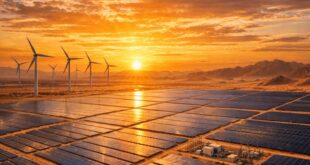
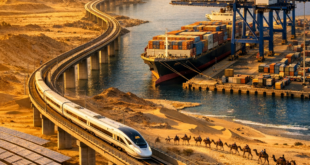
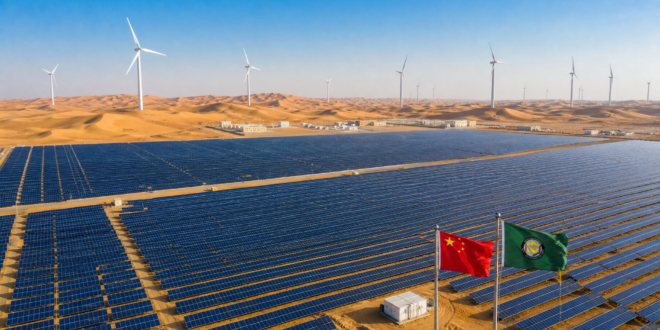
The sands of the Arabian desert are undergoing a transformation that would have seemed unimaginable just a decade ago. Where oil rigs once dominated the horizon, solar panels now gleam under the relentless sun, and wind turbines carve arcs against the sky. This is the new face of China-Middle East cooperation — a partnership pivoting from black gold to green energy.
From Oil Dependence to Renewable Interdependence
For decades, the China-Gulf relationship was defined by a simple equation: the Middle East supplied oil, and China consumed it. But that one-dimensional trade nexus is rapidly evolving into something far more complex and strategically significant.
China is now the world’s largest investor in the energy transition. In 2024 alone, investments in key projects — including new energy storage, charging infrastructure, hydrogen energy, and integrated power systems — reached nearly 200 billion yuan ($28 billion). Meanwhile, the Middle East is on track to attract over $100 billion annually in strategic energy and renewables investment by 2026.
The synergy is undeniable: China brings cutting-edge renewable technology and manufacturing scale, while Gulf states offer abundant sunshine, vast desert land, and the capital to fund ambitious clean energy projects.
Mega Projects Transforming the Desert
Across the region, iconic green energy projects are sprouting — many with Chinese fingerprints all over them:
- Al Dhafra Solar Plant, UAE — The world’s largest single-site solar installation, built by China Machinery Engineering Corp, delivering 2,100 megawatts of power and cutting carbon emissions by 2.4 million metric tons annually.
- Red Sea Project, Saudi Arabia — Home to the world’s largest photovoltaic-energy storage microgrid, powering a luxury tourism destination entirely with renewable energy.
- Ibri Solar Power, Oman — The largest renewable energy project in Oman, showcasing Chinese solar expertise in new markets.
- NOOR CSP, Morocco — One of the world’s largest concentrated solar farms, with Chinese companies constructing its second and third phases.
The $3 Billion Solar Manufacturing Push
In July 2024, Chinese solar giants Jinko Solar and TCL Zhonghuan announced landmark joint ventures with Saudi Arabia’s Public Investment Fund (PIF). With investments exceeding $3 billion, these projects aim to localize solar manufacturing and transform Saudi Arabia into a global hub for renewable energy exports.
“These agreements will not only enhance local capabilities, but also solidify Saudi Arabia’s role in the global energy transition,” a PIF statement declared.
The move reflects a broader trend: Chinese companies aren’t just selling equipment to the Middle East — they’re building factories, training workforces, and transferring technology to create self-sustaining renewable energy ecosystems.
Green Hydrogen: The Next Frontier
Beyond solar, green hydrogen is emerging as the next battleground for China-Gulf cooperation. In 2025, China’s Sinopec agreed to support engineering services for ACWA Power’s green hydrogen and ammonia project in Yanbu, Saudi Arabia. Meanwhile, UAE-based Masdar signed an agreement with China’s Silk Road Fund to explore renewable energy investments across Belt and Road markets.
These projects position the Gulf states to become major exporters of green hydrogen to energy-hungry markets in Europe and Asia — with China as both a technology partner and potential buyer.
Why This Matters
The China-Gulf green energy partnership represents more than just business deals. It signals a fundamental geopolitical shift:
- Energy Security: China reduces dependence on volatile oil markets by diversifying into renewables.
- Economic Diversification: Gulf states advance their Vision 2030 goals by building knowledge-based economies.
- Climate Leadership: Both regions position themselves as leaders in the global energy transition.
- Strategic Alignment: Clean energy becomes a new pillar of China-Middle East relations alongside trade and infrastructure.
Looking Ahead
As global energy markets face continued volatility, the China-Gulf renewable energy alliance offers a model for how traditional energy producers and consumers can reinvent their relationship for a carbon-constrained future.
The desert, it seems, is not just rich in oil — it’s also perfectly positioned to harvest the sun. And with Chinese technology and Gulf ambition, that potential is finally being unlocked.
Sources:
- Middle East Council — “The China-Gulf Green Rush: Fueling Renewable Energy Cooperation”
- China Daily — “China partners Middle East for greener future” (January 2025)
- Trade Arabia — “Middle East to attract over $100bn in energy, renewables investment by 2026”
- The Diplomat — “Will Conflict in the Middle East Boost China’s Renewable Energy Sector?” (April 2026)
- World Economic Forum — “How the Middle East war hits Asia’s energy transition” (May 2026)