 Welcome to China in Middle East Bridging the Gap Between China and the Middle East

Related Articles
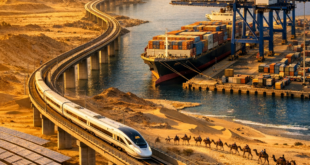
The energy relationship between China and the Middle East is undergoing its most dramatic transformation in decades. What began as a straightforward oil-for-goods exchange is rapidly evolving into a sophisticated partnership built on solar panels, green hydrogen, and clean technology supply chains.
From Oil Dependence to Renewable Interdependence
For years, the Gulf states supplied China with the crude oil that powered its economic miracle. Now, China is returning the favor by supplying the technology that will power the Gulf’s green transition. This shift isn’t merely diplomatic window dressing — it’s backed by billions in investment and concrete projects across the region.
According to research from the Middle East Council on Global Affairs, China–Gulf energy cooperation is shifting decisively from oil dependence to renewable interdependence. The drivers? Solar manufacturing, hydrogen production, energy storage, and clean energy investment at a scale that would have seemed impossible just five years ago.
Solar Surge: Numbers That Matter
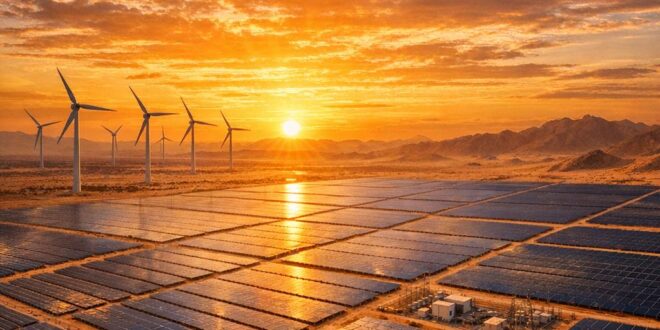
The statistics are genuinely impressive. Saudi Arabia’s solar energy market alone is projected to reach 13.47 gigawatts in 2026, surging from 10.25 gigawatts in 2025. By 2031, that figure is expected to hit 52.72 gigawatts — a staggering compound annual growth rate of 31.40%.
Key developments driving this growth include:
- Joint ventures between Chinese solar giants and Gulf state-linked entities
- Chinese firms building solar manufacturing bases in both the UAE and Saudi Arabia
- Localization of clean energy supply chains throughout the region
- Massive investments announced throughout 2024, with operations ramping up after 2026
Green Hydrogen: The Next Frontier
Beyond solar, hydrogen is emerging as perhaps the most strategically significant area of cooperation. In August 2025, China’s Sinopec announced plans for a facility expected to produce 400,000 tonnes of green hydrogen and 2.8 million tonnes of green ammonia annually — using wind and solar energy as inputs.
The Baker Institute at Rice University notes that these joint ventures are exploring investments across entire supply chains: energy generation, storage systems, electric vehicles, carbon capture technology, and clean hydrogen production. It’s comprehensive in a way that bilateral energy relationships rarely achieve.
Why This Matters for Trade
For businesses watching China-Middle East trade flows, the implications are significant:
- New export categories: Chinese clean tech exports to the GCC are growing exponentially
- Local manufacturing: Chinese firms are onshoring production in the UAE and Saudi Arabia
- Supply chain resilience: The Gulf is positioning itself as a global clean energy manufacturing hub
- Diversification: Both sides reduce dependence on traditional energy trade patterns
As Princeton’s Journal of Public and International Affairs observes, Chinese solar investments in Gulf manufacturing bases represent a third level of engagement — moving beyond simple trade or project contracts into genuine supply chain integration.
Looking Ahead
The transition is still accelerating. With solar capacity in China itself projected to outpace coal in 2026, according to the China Electricity Council, Beijing has both the manufacturing capacity and the policy imperative to deepen clean energy partnerships worldwide.
The Gulf, for its part, has the capital, the land, and the solar irradiance to become a genuine global clean energy powerhouse. The only missing ingredient was technology and manufacturing expertise — and China is providing that in abundance.
For traders, investors, and policymakers, the message is clear: the future of China-Gulf relations will be written in renewable energy. The oil era isn’t ending tomorrow, but the green era is unmistakably beginning.
Sources: Middle East Council on Global Affairs, Mordor Intelligence, Baker Institute at Rice University, Princeton Journal of Public and International Affairs, Carbon Brief, Arab News