 Welcome to China in Middle East Bridging the Gap Between China and the Middle East

Related Articles


Published: May 5, 2026
Category: International Trade & Economic Diplomacy
The $111.5 Billion Milestone
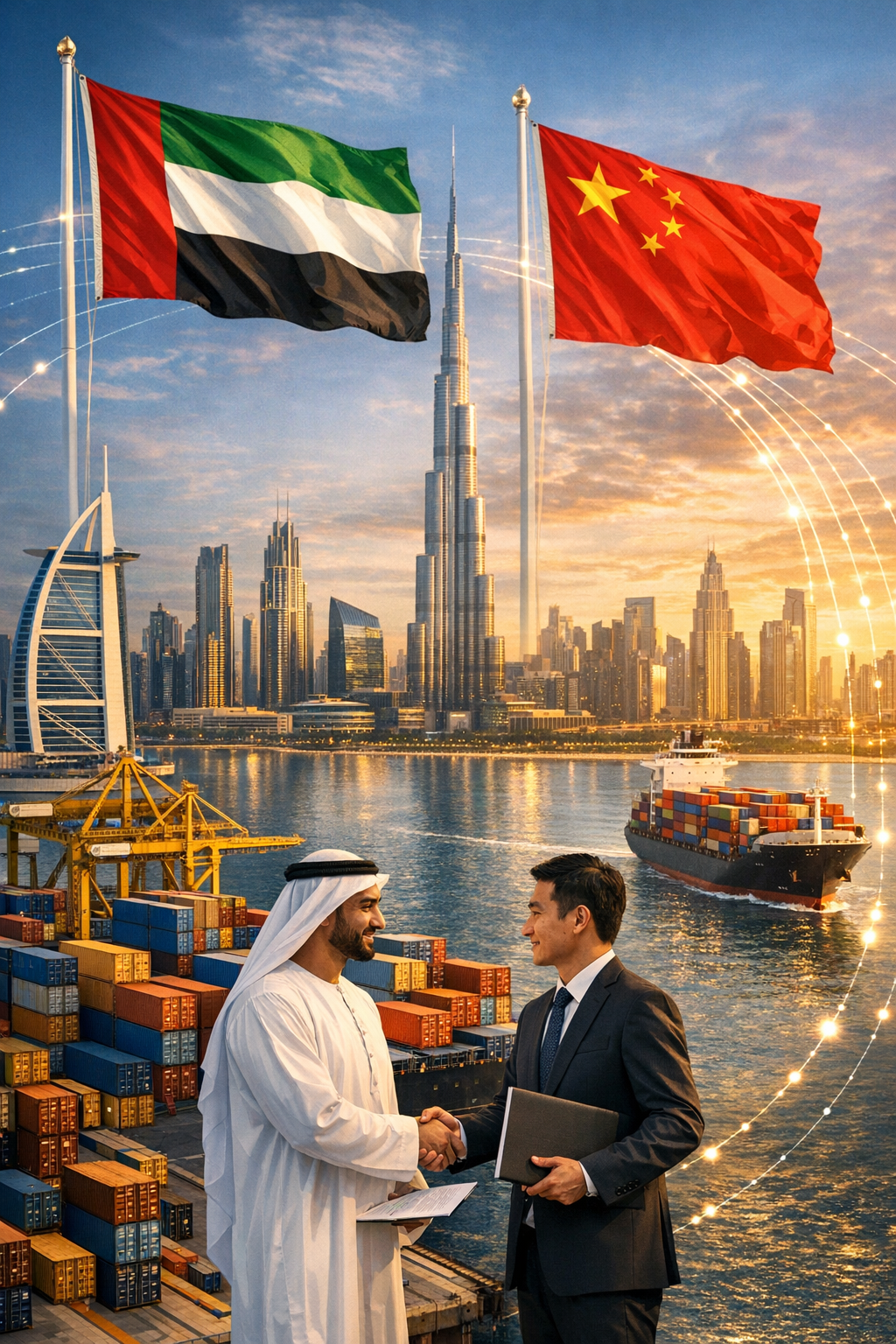
In a landmark development that underscores the deepening ties between the Middle East and Asia, the UAE and China have signed 24 major agreements to expand trade, investment, and sector collaboration. The deals were announced during the UAE-China Business Promotion Conference in Beijing, led by Sheikh Khaled bin Mohamed bin Zayed Al Nahyan, Crown Prince of Abu Dhabi.
The numbers are staggering:
- Non-oil trade reached $111.5 billion in 2025 — a record 24.5% annual growth
- China remains the UAE’s largest trading partner, accounting for ~11% of total non-oil trade
- The UAE is China’s largest trading partner in the Middle East and Africa
- Trade has grown 800-fold since diplomatic relations began in 1984
Dr. Thani bin Ahmed Al Zeyoudi, UAE Minister of Foreign Trade, stated: “The UAE and China share a longstanding economic partnership, built on decades of cooperation and a shared vision for prosperity.”
What’s in the 24 Agreements?
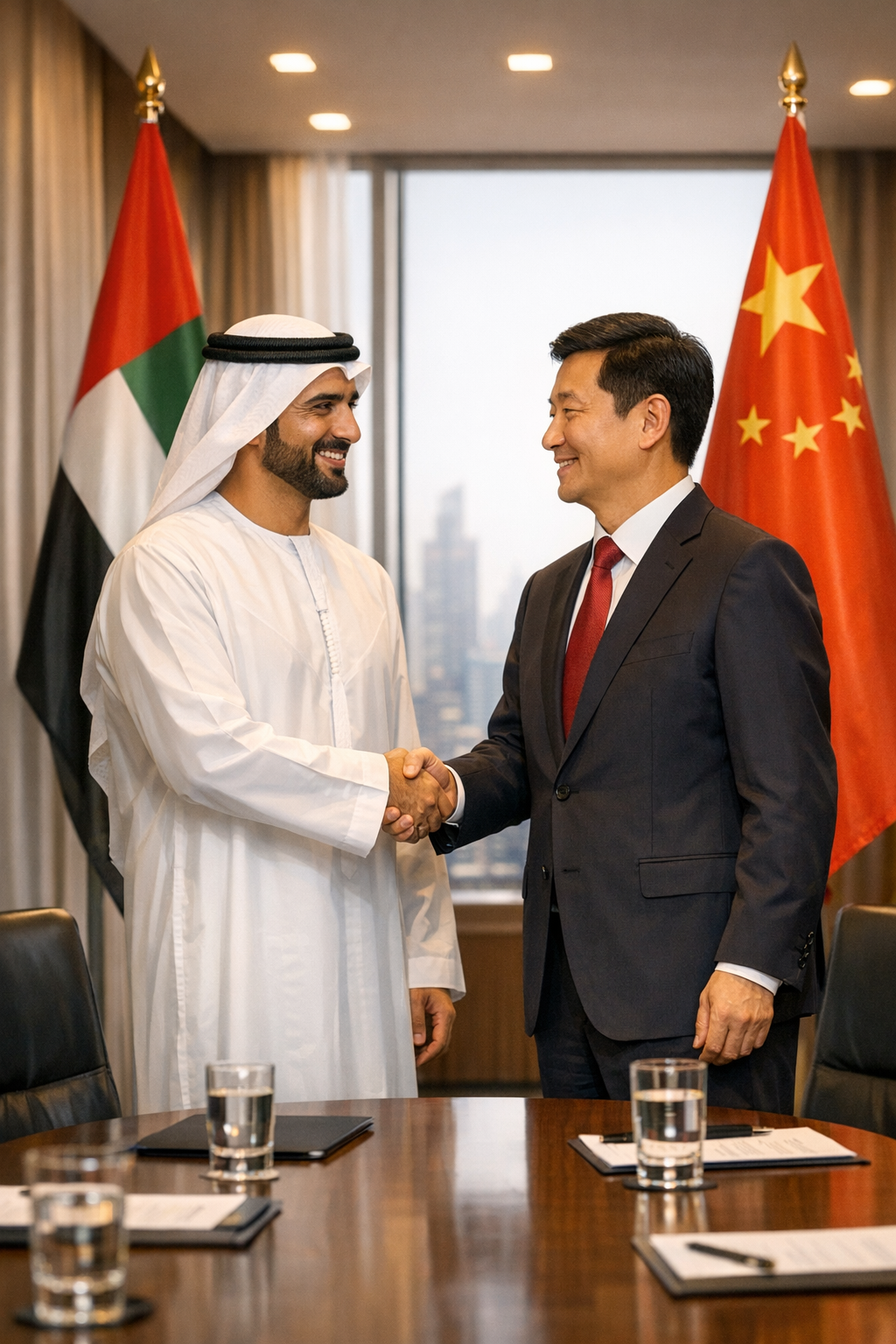
The agreements span multiple strategic sectors:
| Sector | Focus Areas |
|---|---|
| Technology & Innovation | AI, 5G, digital infrastructure |
| Renewable Energy | Solar, wind, green hydrogen projects |
| Infrastructure | Rail, ports, logistics hubs |
| Finance & Investment | Cross-border investment funds |
| Manufacturing | Industrial zones, supply chain integration |
The conference theme — “From Vision to Value” — reflects a deliberate shift from symbolic partnerships to tangible economic outcomes.
Infrastructure: The Etihad Rail Example
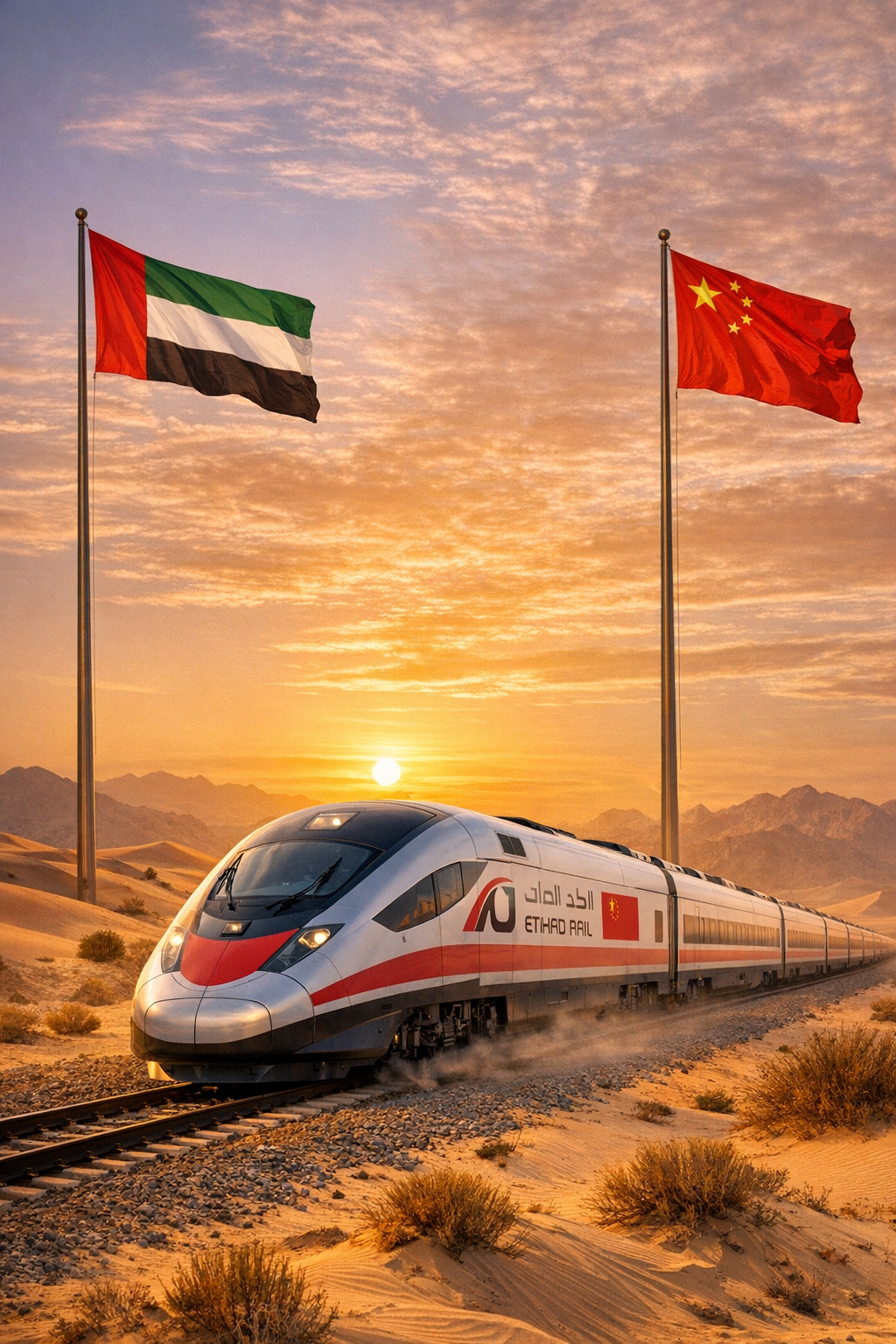
One of the most visible symbols of UAE-China cooperation is the Etihad Rail project — a 1,200km high-speed rail network spanning the UAE and linking Saudi Arabia and Oman. The project, which includes Chinese investment and expertise, has transformed travel: the 125km journey from Abu Dhabi to Dubai now takes just 57 minutes in air-conditioned comfort.
This is just one example of how China’s Belt and Road Initiative (BRI) is reshaping Middle Eastern infrastructure. In 2024 alone, the Middle East received $39 billion in BRI investments — a 102% year-on-year surge, with Saudi Arabia drawing nearly $19 billion.
The China-GCC Free Trade Agreement: 2026’s Big Prize
Looking ahead, the most significant development may be the long-awaited China-GCC Free Trade Agreement. After 22 years of negotiations, there is renewed momentum to finalize the deal in 2026, coinciding with:
- The second China-Arab States Summit
- The second China-GCC Summit
Both summits will be hosted by China, and the UAE has voiced strong support for ensuring their success. If finalized, this FTA would create one of the world’s largest free trade zones.
Why This Matters for Global Trade
The UAE-China partnership is more than bilateral — it’s a gateway strategy:
- For China: The UAE serves as a hub for trade flows between Asia, the Middle East, and Africa
- For the UAE: China provides technology, manufacturing expertise, and access to the world’s largest consumer market
- For the Region: Other GCC states are watching closely, with Saudi Arabia, Kuwait, and Oman pursuing similar deepening ties
As Middle Eastern countries pivot eastward and diversify away from Western dependence, the UAE-China model is becoming a template for 21st-century economic diplomacy.
Key Takeaways
- ✅ $111.5B non-oil trade — a new record with 24.5% growth
- ✅ 24 new agreements covering technology, energy, infrastructure, and finance
- ✅ China-GCC FTA potentially finalized in 2026 after 22 years
- ✅ BRI investments in Middle East surged 102% to $39 billion in 2024
- ✅ Strategic shift from oil dependency to diversified knowledge economies
This article was compiled from publicly available sources as of May 2026.